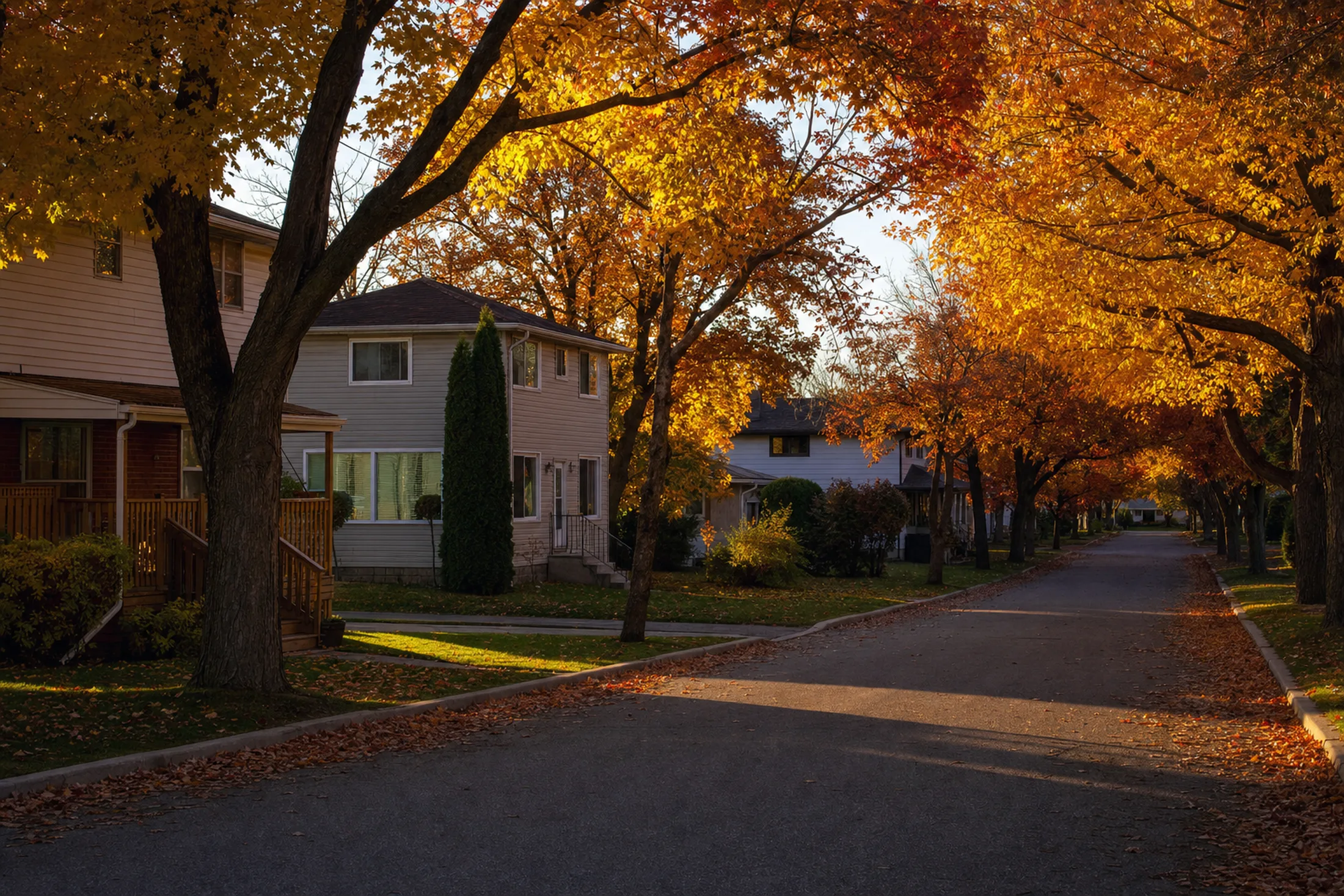
North Bay is a small Northern Ontario city with a stable institutional employment base, an unusually tight rental market and a housing stock that is old enough to be cheap and sound enough to be worth owning. That combination is why small landlords keep showing up here. It is also why the market punishes carelessness: capital costs are real, winters are hard on buildings, and Ontario's rent rules limit how quickly you can grow income on an existing tenancy. This guide covers what the numbers actually say in 2026 and what to check before you commit.
Nothing here is investment, tax or legal advice. Figures are cited so you can check them against the source and against whatever month you happen to be reading in.
1. The demand drivers
North Bay's economy is institutional rather than cyclical, which is the single most important fact for a residential investor. The city has a population of about 71,700, and health care and social assistance, retail trade, and educational services together account for roughly 44% of jobs in the region, generating about $3.8 billion in household and business incomes, or roughly $52,500 per resident, according to the federal economic profile of North Bay. The largest hiring employers are the North Bay Regional Health Centre, Nipissing University, Canadore College, Voyageur Aviation and Ontario Northland, per local labour-market reporting.
Two consequences follow. First, tenant demand is not tied to a single mill or mine: a hospital, a university and a college produce a continuous flow of staff, students and their families who need housing regardless of the commodity cycle. Second, income growth is modest. Public-sector and institutional wage settlements set the ceiling on what your rents can realistically reach.
Demography matters too. Between 2011 and 2021 North Bay's population grew 12%, slightly ahead of the province's 11%, but the share of residents aged 65 and over grew 30% while the working-age share fell — the same federal profile puts seniors at 22% of the population. An ageing population is a durable source of demand for smaller, single-level, low-maintenance units, and a slow structural headwind for four-bedroom family houses at the top of the price range.
2. What the rental market looks like
The rental picture is the strongest part of the North Bay investment case. The City's own Housing Needs Assessment puts the overall vacancy rate at 1.6% — well below the 3% the report treats as a healthy balance — with one-bedroom vacancy at just 0.4% and a primary rental universe of roughly 3,494 purpose-built units. For context, the same report notes the city averaged 3.6% vacancy over the preceding eleven years, so current tightness is a departure from the norm rather than a permanent condition.
Rents remain low in absolute terms compared with Southern Ontario. A summary of CMHC's October 2025 Rental Market Survey figures for Northern Ontario lists North Bay at about $1,078 for a one-bedroom and $1,404 for a two-bedroom, the lowest of the four major northern centres alongside Sault Ste. Marie.
| Centre | 1-bedroom | 2-bedroom |
|---|---|---|
| North Bay | $1,078 | $1,404 |
| Sault Ste. Marie | $1,167 | $1,394 |
| Thunder Bay | $1,173 | $1,493 |
| Greater Sudbury | $1,244 | $1,555 |
Figures as summarised from the CMHC Rental Market Survey, October 2025, via Diaspora North's Northern Ontario renter's guide.
Read those two facts together and you get the defining feature of the market: very low vacancy on very low rents. Turnover, not the annual guideline increase, is where income growth comes from — and in a 1.6% vacancy market, turnover is infrequent. Underwrite accordingly. Commercial lenders in the region typically model 3–4% vacancy and flat-to-modest rent growth for North Bay rather than the observed 1.6%, which is a sensible discipline for a private buyer to borrow.
3. Prices and what they imply
Residential prices in North Bay have been broadly flat to modestly higher through 2026 after several volatile years. The North Bay and Area REALTORS® Association's MLS® Home Price Index composite benchmark was $429,300 in April 2026, up 1.8% year over year, with a year-to-date average sale price of $501,833. The median single-detached sale price was $475,000 in the first quarter of 2026, up 2.2%. By mid-summer the average price of a home sold had reached $513,251 in July 2026, 8.5% above July 2025, with sales running well above five- and ten-year averages for the month.
Note the gap between the benchmark ($429,300) and the average ($501,000–$513,000). The benchmark tracks a typical home with constant characteristics; the average is pulled around by whatever happened to sell that month, and in a market of roughly 50–80 monthly transactions a handful of expensive waterfront sales move it several percent. Use the benchmark and the HPI for trend, and the average only with a wide error bar.
A price series built on 60 sales a month is a mood, not a measurement. Verify any North Bay comparable against the specific street, vintage and lot.
For an investor, the practical arithmetic is straightforward. A two-bedroom unit renting near $1,400 gross supports far less debt than a similar unit in Southern Ontario, but the entry price is roughly half. Small multi-family stock, particularly 1950s–1970s walk-ups, is where the ratio between purchase price and achievable rent has historically been most workable in this city. It is also the stock with the largest deferred capital bills.
4. New supply
Supply is increasing from a very low base, and this is worth watching if you are buying on the assumption that vacancy stays near 1.6%. North Bay built 242 housing units in 2025, roughly double the 2024 total, with residential construction accounting for about $49.9 million of $147.5 million in total construction value, according to a review of the city's building-permit data. Ontario recognised the city with $336,000 through the Building Faster Fund after it broke ground on 113 new homes in 2025, 13% above its provincial target, and the federal government and the City signed an agreement to accelerate construction of 337 homes over three years.
A few hundred units in a city with about 3,500 purpose-built rental units is not trivial. It is unlikely to flood the market, but a buyer underwriting 1.6% vacancy and 5% annual rent growth in perpetuity is buying the top of a cycle, not a trend.
5. Property types, and how they behave
Single-family houses
The cheapest way in, and the least forgiving on cash flow. One vacancy is 100% vacancy, and a single furnace failure lands entirely on one rent roll. Houses work best where the numbers are supported by something other than yield — a below-market purchase, a legal second unit, or an eventual owner-occupier resale.
Duplexes and triplexes
The sweet spot for most first-time landlords here. Financing is still residential in character, management stays simple enough to self-perform, and two or three rents smooth out a vacancy. Verify that additional units are legal and permitted: a great many "triplexes" in older Ontario housing stock are two legal units and one long-standing basement apartment that has never seen a building permit or a second means of egress.
Small apartment buildings (five units and up)
At five units the property becomes commercial for financing purposes, which opens the CMHC-insured multi-unit programs discussed below and generally means longer amortisations and lower rates than a conventional commercial loan. It also means valuation follows net operating income rather than comparable sales, so every dollar of expense you remove capitalises into value. This is where local operating knowledge pays: in Northern Ontario, heating, snow removal, parking and roof age drive the expense line more than anything else.
Student-adjacent rentals
Nipissing University and Canadore College share a campus on the escarpment, and the surrounding rental market is shaped by them. Student tenancies bring higher gross rent per square foot and higher turnover, wear and seasonality. Note that under CMHC's multi-unit insurance rules student housing projects qualify for the flagship MLI Select program only under the energy-efficiency and accessibility criteria, not affordability, per the program overview.
6. Financing basics in Canada
Residential mortgage rules govern properties with one to four units; five or more units is multi-unit residential and a different world. For multi-unit, CMHC mortgage loan insurance is what makes the economics work, because insured loans price far better than uninsured commercial debt.
Under CMHC's standard multi-unit rental product, purchase financing is available up to 85% of purchase price or lending value. The more aggressive option is MLI Select, a points-based program in which borrowers earn points for affordability, energy efficiency and accessibility commitments. Key parameters from the program documentation:
- Minimum project size of five units (50 units or beds for retirement homes).
- A minimum of 50 points across the three outcome categories is required to qualify at all; higher point tiers unlock better leverage and amortisation.
- For existing properties, the affordability tiers start at 40% of units at rents no higher than 30% of median renter income for 50 points, rising to 80% of units for 100 points — a materially harder test than for new construction.
- The non-residential component of a mixed-use building must not exceed 30% of gross floor area or 30% of lending value.
Program summaries note that at the top point tiers MLI Select can reach up to 95% loan-to-value with amortisation as long as 50 years, and that borrowers are generally expected to show net worth of at least 25% of the loan amount (minimum $100,000) plus about five years of relevant management experience, or a contract with a professional third-party manager (see, for example, this program summary). Confirm current terms with CMHC or an approved lender before you rely on them; the program's parameters have been revised repeatedly.
The number that actually decides the deal
Debt service coverage. Lenders want net operating income comfortably above the annual mortgage payment, and regional underwriting guidance for North Bay commonly targets a DSCR of 1.20 or better at prevailing rates, with vacancy stressed to 3–4% rather than the observed 1.6%. Build your model that way first; if it only works at 1.6% vacancy and today's rents, it does not work.
7. Ontario's rent rules — read these before you model income
Ontario caps annual rent increases for most existing tenancies. The guideline is 2.1% for 2026 and 1.9% for 2027, per the Government of Ontario; the 2026 figure was announced as a cap at the rate of inflation in June 2025. Three procedural rules matter as much as the percentage:
- At least 12 months must pass between increases, or since the tenancy began.
- The landlord must give 90 days' written notice on the prescribed Landlord and Tenant Board form.
- The guideline applies to most units, but units first occupied after 15 November 2018 are exempt from the cap — a distinction that materially changes the value of newer purpose-built stock. Check the provincial guidance against your specific building's occupancy history.
Above-guideline increases (AGIs) exist but are narrow. Under the Residential Tenancies Act, 2006, a landlord may apply to the Landlord and Tenant Board for an increase above the guideline where municipal taxes and charges rose by an extraordinary amount, where eligible capital expenditures were incurred, or for certain third-party security-service costs. Increases for capital expenditures and security costs are capped at 3% above the guideline in any one year, with any remainder taken over the following two 12-month periods. Anyone modelling a value-add renovation on AGI recovery should also follow Bill 82, Protecting Renters from Unfair Above Guideline Increases Act, which proposes additional evidentiary requirements and new exclusions for cosmetic or routine work.
The honest conclusion: in Ontario you cannot renovate your way to a much higher rent on a sitting tenancy, and you should not buy a building on the assumption that you can. Value comes from buying well, operating well, reducing expenses, and capturing market rent legitimately at natural turnover.
8. Due diligence for a Northern Ontario building
Everything on a standard checklist still applies. These are the items that specifically decide North Bay deals.
- Heating system and fuel type. Who pays heat, what it costs across a real January, and whether the building is on natural gas, electric baseboard or oil. Electric baseboard in a landlord-paid building is a structural cash-flow problem, not a line item. Ask for 24 months of actual utility bills, not an estimate.
- Roof, envelope and windows. Age, remaining life and the last time anything was done. Freeze–thaw cycles and ice damming are the local failure mode; interior water staining near exterior walls on top floors is worth a specific look.
- Foundation and drainage. Older stock on the flats can have chronic basement moisture. Check grading, weeping tile history, sump function and any sign of past flooding.
- Electrical. Knob-and-tube and 60-amp services still exist in the older housing stock and can make insurance difficult or expensive. Confirm insurability before you waive conditions.
- Legality of every unit. Obtain a zoning compliance or occupancy confirmation from the City for the unit count you are paying for. Egress, ceiling height and fire separation are where unpermitted units fail.
- Fire code compliance. For multi-unit buildings, ask for recent fire inspection correspondence, the fire safety plan and evidence of annual alarm and extinguisher servicing.
- The rent roll, verified. Match each stated rent to a lease and to actual deposits, and confirm the date and amount of the last legal increase and that proper notice was given. An overstated or improperly raised rent roll is a real liability, not just an optimistic spreadsheet.
- Snow, parking and site. Contract cost for plowing and sanding, where the snow is actually piled, and whether the parking count meets both the zoning requirement and the tenants' cars.
- Property taxes and water. Get the current assessment and tax bill rather than assuming a rate, and confirm whether water is separately metered or a shared building expense.
- Environmental and oil tanks. Buried or decommissioned oil tanks appear in older Northern Ontario properties and are expensive to resolve after closing.
9. A reasonable base case for 2026
Pulling the evidence together: North Bay in 2026 offers an institutional employment base that is stable rather than growing quickly, a rental market that is genuinely tight at 1.6% vacancy but on some of the lowest rents in the province, prices that are drifting up modestly from a benchmark near $429,000, a modest but real increase in new supply, and a rent-control regime that rewards patient operators over aggressive repositioners. Older small multi-family stock remains the most defensible way to earn a yield here, provided the capital plan is honest about roofs, heating and electrical.
The failure modes are equally clear. Underwriting today's vacancy as permanent, assuming AGIs will fund a renovation, buying a rent roll you have not verified, or inheriting a deferred capital bill you priced at zero. None of these are specific to North Bay; all of them are more expensive here, because the rents that have to absorb the mistake are lower.
Own something in North Bay you're thinking of selling?
Madigan Properties owns and operates a portfolio of residential rental buildings in North Bay and across Northern Ontario. We also buy houses, apartment buildings and portfolios directly from owners — no listing, no commission, no obligation.
Get in touchSources
- Government of Canada — Economic profile: North Bay (CA), Ontario
- City of North Bay — Housing Needs Assessment, March 2025 (PDF)
- Diaspora North — Northern Ontario renter's guide (CMHC Rental Market Survey, October 2025 figures)
- CREA Statistics — North Bay and Area REALTORS® Association
- CREA Statistics — North Bay and Area residential activity
- CTV News Northern Ontario — North Bay home sales, July 2026
- North Bay housing construction, 2025 building-permit review
- Government of Ontario — Building Faster Fund award to North Bay
- CMHC — Helping build more homes, faster in North Bay
- CMHC — MLI Select
- CMHC — MLI Select program overview (PDF)
- CMHC — Multi-unit standard rental housing product sheet (PDF)
- Government of Ontario — Residential rent increases
- Government of Ontario — Capping rent increases at the rate of inflation (2026 guideline)
- Residential Tenancies Act, 2006, S.O. 2006, c. 17
- Tribunals Ontario, Landlord and Tenant Board — Applications for a rent increase above the guideline
- Legislative Assembly of Ontario — Bill 82, Protecting Renters from Unfair Above Guideline Increases Act
- Report North Bay — local labour market and top employers
- MLI Select program summary — eligibility and borrower requirements